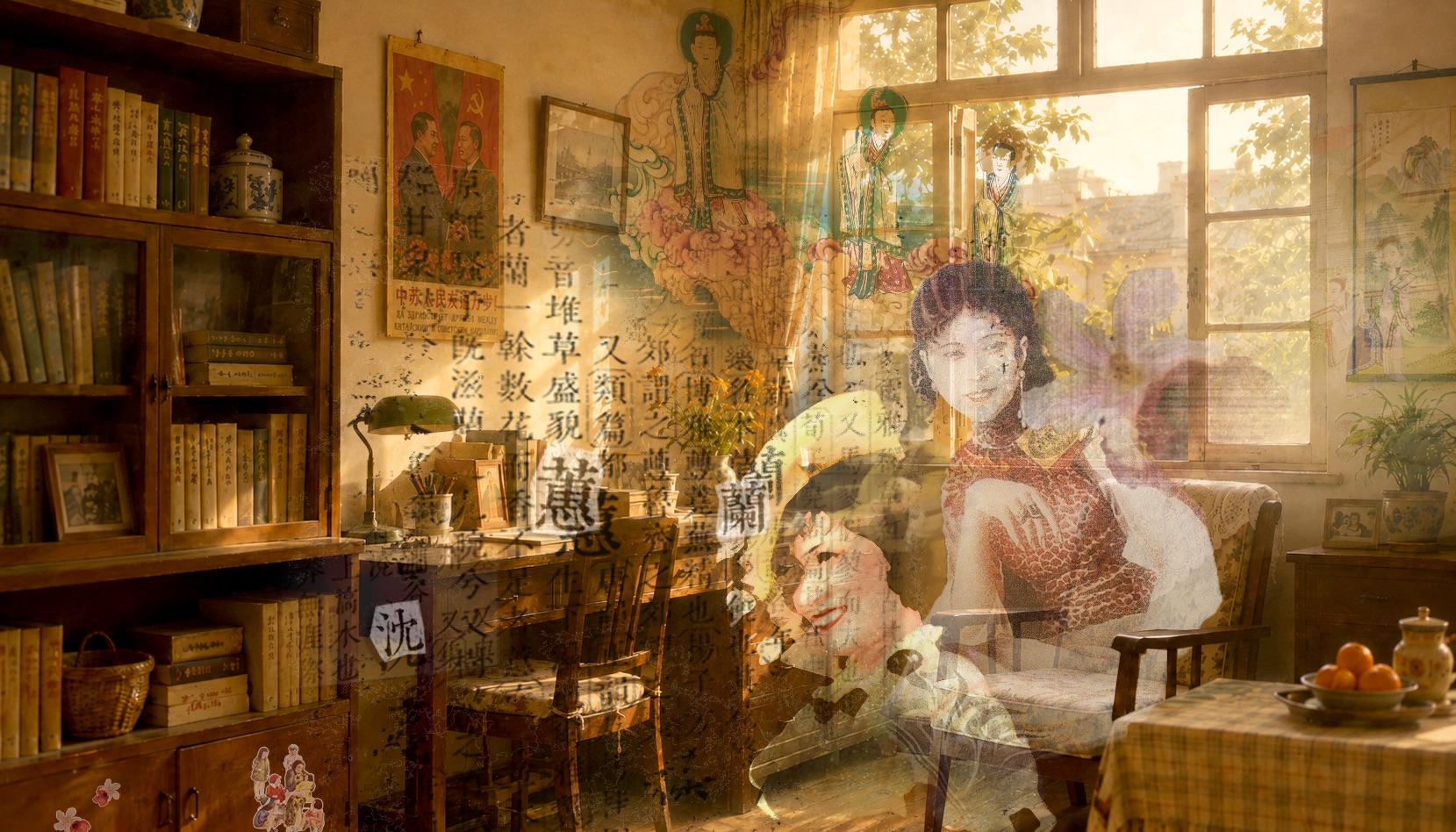
一九六九年,安徽省芜湖县红星人民公社。沈蕙兰下乡还不到一年。1969. Red Star People's Commune, Wuhu County, Anhui Province. Shen Huilan had been sent down to the countryside for less than a year.
她是芜湖人,父亲沈鸿礼在芜湖师范学院教古代文学,母亲周秀英在市第一中学教语文。她自己高中毕业那年考上了安徽师范学院中文系,一九六六年夏天毕业,分到皖南中学教语文。毕业前后,运动来了。图书馆关门,课停了,她父亲被贴了大字报,说他"宣扬封建糟粕、毒害青年"。她记得那张大字报用的是红纸,字写得很大,歪歪扭扭,贴在她父亲办公室的门上,她站在楼道里看,一个字也没有说。She was from Wuhu. Her father, Shen Hongli, taught classical literature at Wuhu Normal University; her mother, Zhou Xiuying, taught Chinese at the city's No. 1 Middle School. The year she finished high school, she was admitted to the Chinese department of Anhui Normal University, graduating in the summer of 1966 and assigned to teach Chinese at Wannan Middle School. Around the time she graduated, the Movement began. The library closed, classes stopped, and a dazibao — a big-character poster — went up denouncing her father for “spreading feudal dross and poisoning the youth.” She remembered that the poster was written on red paper, the characters large and crooked, pasted to the door of her father's office. She stood in the corridor and looked at it. She said nothing.
六八年十二月,毛主席最高指示发布,她和另外四十七个同学被分配到芜湖县红星人民公社,接受贫下中农再教育。In December of '68, after Chairman Mao's Highest Directive was issued, she and forty-seven of her former classmates were assigned to Red Star People's Commune in Wuhu County, to be re-educated by the poor and lower-middle peasants.
公社在芜湖城往南走四十里,长江边上,地是平的,种水稻,每到夏天蚊子大得像花生米。她原来在城里的皖南中学教了两年左右语文——如今每天早上五点半出工,弯腰插秧,手腕、脚踝和颈后长年生着水田里泡出来的皮疹,晚上开批斗会或忆苦思甜会,轮流发言说自己的思想改造心得。The commune sat forty li south of Wuhu, on the bank of the Yangtze, the land flat, planted with rice; in summer the mosquitoes grew as fat as peanuts. She had taught Chinese in the city for two years or so, at Wannan Middle School — now she went out to the fields at five-thirty every morning, bending to plant rice seedlings, her wrists, ankles, and the back of her neck perpetually marked with rashes from the paddy water. In the evenings there were struggle sessions or “recall bitterness, taste sweetness” meetings, where everyone took turns reporting on their progress in ideological reform.
她总是把心得说得四平八稳,不长不短,不出错,不出彩。这是她在公社活下去最重要的一件事,比插秧更重要。She always kept her reports even and unremarkable — not too long, not too short, never a mistake, never a flourish. This was the single most important skill for surviving the commune, more important than planting rice.
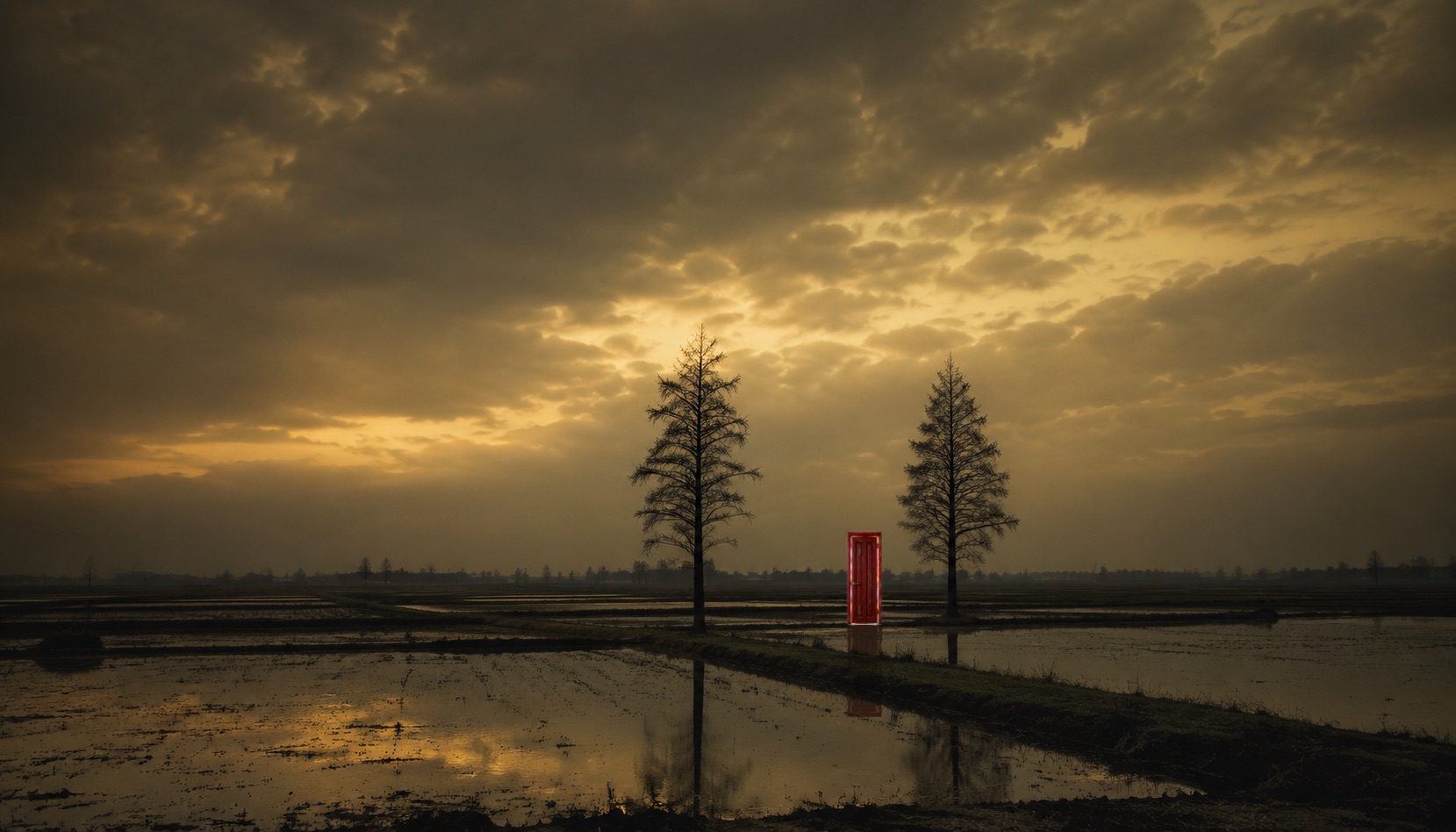
一九七零年四月末的一个傍晚,那扇门出现了。One evening in late April 1970, the door appeared.
春汛刚退,田埂还湿,芦苇刚刚抽芽,整片水田映着那种阴沉的、带着铁腥气的黄昏。沈蕙兰收工晚,因为她负责的那块秧苗补种出了问题,队长罗大柱让她一个人补完才能回去。The spring flood had just receded, the paths between the paddies still damp, the reeds only beginning to bud. The whole rice field reflected a dusk that was overcast, carrying the metallic smell of rain. Shen Huilan had finished work late — something had gone wrong with the replanting in the section she was responsible for, and the team leader, Luo Dazhu, told her she couldn't go back until she'd finished it alone.
她独自弯腰补种到日落,腰痛,手指泡白了,浑身是烂泥。She bent over, replanting alone until sundown — her back ached, her fingers had gone soft and white from the water, and she was covered in mud.
站起来的时候,她看见了它。When she straightened up, she saw it.
就在前方两棵水杉之间,门独自立着。There, between two dawn redwoods, a door stood alone.
木头的门,不新,刷过深红色的漆,油漆已经开裂,边缘的木头露出灰色的纹理。铜制的门把手,样式有点奇怪,不像国内的东西。没有墙,没有房子,单立在田埂上,门缝里透出一丝光——不是煤油灯的昏黄,也不是电灯的白,是一种她没有见过的颜色,湿润的、流动的、带着某种她叫不出名字的气味的光。A wooden door, not new, painted a deep red that had begun to crack, the grey grain of the wood showing through at the edges. A brass handle, oddly shaped, unlike anything made at home. No wall, no house — it simply stood there on the ridge between the paddies. Through the gap at its edge came a sliver of light, neither the dim yellow of an oil lamp nor the white of an electric bulb, but a color she had never seen: damp, fluid, carrying a scent she couldn't name.
她站在泥水里,远远看了很久。She stood in the mud and water, looking at it from a distance for a long time.
她是教文科的,读过《聊斋》,读过《山海经》,读过她父亲偷藏在木箱底层的西洋小说译本——但这些都是书里的事,书里的事是归书里管的。She had studied literature. She had read Strange Tales from a Chinese Studio, the Classic of Mountains and Seas, translated Western novels her father kept hidden at the bottom of a wooden trunk — but those were things that belonged to books, and things in books stayed in books.
她还是走过去了。She walked over anyway.
理由很简单:她已经三年没有看见任何让她觉得好奇的东西了,好奇心像一块肌肉,三年不用,今天它忽然动了一下,她管不住它。The reason was simple: for three years she had not seen a single thing that made her curious. Curiosity was like a muscle — unused for three years, and today it suddenly twitched, and she could not hold it still.
她把门拉开。She pulled the door open.
声音是立刻的,毫无过渡,如同有人把一张唱片的音量旋钮一下拧到最大:人声、车声、某种强劲有力的音乐、远处隐约的汽笛——全部混在一起,但不是噪音,是一种她无法描述的充盈,像是整个空气都塞满了声音,每一种声音都在说:这里有人,这里有人,这里有很多人,他们不安静。The sound came at once, with no transition, as if someone had turned a record player's volume all the way up: voices, cars, some kind of forceful music, a distant ship's horn — all mixed together, but it wasn't noise. It was a fullness she couldn't describe, as if the air itself were packed with sound, and every sound was saying: there are people here, there are people here, there are so many people here, and they are not quiet.
然后气味到了。Then came the smell.
咖啡。她认识这个气味,战前的书里提过,她父亲说过味道——那种气味确实是这样的,苦的,热的,从某个通风口往外涌。还有潮湿的石头、汽油、餐馆里飘出来的油烟,以及一种她完全陌生的花香,浓烈,带着酒精的底子,她后来才知道那叫香水。Coffee. She knew this smell — prewar books had mentioned it, and her father had once described the taste. This was exactly as they'd said: bitter, hot, pouring out from some vent. And beneath it, wet stone, gasoline, the oily smoke drifting from a restaurant, and a floral scent entirely foreign to her, heavy, with something like alcohol underneath it. She would later learn it was called perfume.
她站在门框里,看见了另一个世界的夜晚。Standing in the doorframe, she saw the night of another world.
街道不宽,但高大,两侧的建筑紧贴着站在一起,砖是红棕色的,窗台上有铁栏杆,有人把花盆摆在外面,甚至晾了衣服——这个细节让她怔了一下,晾衣服是很日常的事,但这里的日常是另一种日常。街灯是橙黄色的,把湿润的石板路照成一片暖金,积水的水洼里倒映着霓虹——那个绿色的光管拼成的字她认不出,只知道那种绿色明亮得有些咄咄逼人,像是光本身在和黑夜争论什么。The street was narrow but the buildings tall, pressed close together, the brick a reddish brown, iron railings on the windowsills. Someone had set out flowerpots, even hung laundry out to dry — this detail caught her off guard. Hanging laundry was an ordinary thing, but the ordinary here was a different kind of ordinary. The streetlamps burned amber, turning the wet cobblestones a warm gold, and puddles reflected neon — a word spelled out in green tubing that she couldn't read, only that the green was bright to the point of being almost aggressive, as if the light itself were arguing with the night.
街上有人。There were people on the street.
一个女人走过,穿着喇叭裤和一件格子衬衫,头发蓬松,没有扎起来,走路很快,提着一个帆布包,包上有什么图案,她看不清。两个男人坐在一家小馆子的门口,面前放着高脚玻璃杯,在说话,说话的时候身体前倾,很投入,其中一个还在比画什么,神情是某种沈蕙兰久违到几乎认不出的东西——自在。A woman walked past in bell-bottoms and a plaid shirt, her hair loose and unbound, walking quickly, carrying a canvas bag with some design on it she couldn't make out. Two men sat outside a small restaurant, tall glasses in front of them, talking, leaning toward each other, absorbed, one of them gesturing with his hands — their expressions held something Shen Huilan had gone without for so long she almost didn't recognize it. Ease.
那是自在的神情。她想不到更准确的词了。That was what it was. Ease. She couldn't think of a more exact word.
那两个男人在自在地说话,在一个没有人在旁边记录的地方自在地说话。The two men were talking with ease, talking with ease in a place where no one stood by taking notes.
她的眼睛有点发烫。Her eyes began to sting.
一阵风从那扇门里吹过来,把她额前的头发吹乱——她的头发剪成了短发,工整的,没有任何多余的长度,但那阵风吹过来的时候,她忽然记起了初中时候扎的两条辫子,黑的,各有一根红绳,一直垂到腰。A gust of wind blew through the door and mussed the hair on her forehead — she wore it short now, trimmed neat, with nothing to spare. But when the wind came, she suddenly remembered the two braids she'd worn in middle school, black, each tied with a red string, hanging all the way to her waist.
她想到了她父亲。She thought of her father.
父亲此刻在哪里?自从她下乡,每月一封信,但去年冬天信断了,有同学捎话说沈老师被安排去了干校,在哪里不知道,信能不能送到也不知道。她母亲来了一封信,只说"家里都好,你放心",但"都好"两个字的字迹比往常重,像是写的时候手在用力。Where was Father now? Since she'd been sent down, he had written once a month, but the letters had stopped last winter. A classmate passed word that Teacher Shen had been sent to a cadre school, though no one knew where, or whether a letter could even reach him. Her mother had sent one letter, saying only, “Everything is fine at home, don't worry” — but the characters for “fine” were pressed harder into the paper than usual, as if her hand had strained while writing them.
一位穿米色风衣的中年妇人从门口走过,手里拎着一袋东西,袋子是纸的,印着什么字,她探眼去看,竟然看见了"BOOK"——书。那个妇人提着一袋书,随随便便地走在街上,书被装进纸袋,和苹果、和日用品放在一起,是日常的,是轻便的,是不需要藏在木箱底下的。A middle-aged woman in a beige trench coat passed the doorway, carrying a paper bag with something printed on it. She leaned in to look and made out the word: BOOK. The woman was carrying a bag of books, walking down the street without a second thought, the books tucked in beside apples and other errands — ordinary, weightless, needing no wooden trunk to hide in.
沈蕙兰握住门框,手指的关节被她自己掐白了。Shen Huilan gripped the doorframe, her knuckles white from her own grip.
她很清楚这扇门通向哪里——不是地狱,不是幻觉。是地球另一端真实存在的某个街道,某个和她同时活在一九七零年的地方,只是两个地方之间隔了一扇门,而门这一边是红星公社、是泡烂的手指、是四平八稳的批斗会发言,门那一边有人在路边喝酒说话,有人提着装书的纸袋走路,有人的头发长而散乱,没有人来管。She understood exactly where the door led — not to hell, not to some hallucination. To a real street on the other side of the earth, a place living through 1970 at the very same time she was, separated from her only by this door. On this side was Red Star Commune, her water-softened fingers, her carefully even struggle-session reports. On the other, people drank and talked by the roadside, carried bags of books down the street, wore their hair long and loose, with no one to answer to.
她知道,走进去,就回不来了。She knew that if she stepped through, she would never come back.
不是因为门会关上。而是她父亲还在国内的某个干校,她母亲还在芜湖城,她弟弟沈惠国今年刚高中毕业,面临同样的下乡分配。她如果消失,这件事会落在他们三个人头上,比她一个人承担的,要重得多。Not because the door would close. It was that her father was still somewhere at a cadre school, her mother still in Wuhu, and her younger brother, Shen Huiguo, had just finished high school this year and faced the same assignment to the countryside. If she vanished, the weight of it would fall on the three of them — far heavier than anything she alone could carry.
但她还是在那个门口站了很长时间。But she stood at that doorway for a long time all the same.
长到夜风把水田的腥气送过来,和那边街道里的咖啡香混在一起,变成一种现实中不存在的奇怪气味,只属于这个门口,只属于这一刻。Long enough for the night wind to carry the rank smell of the paddies over, mixing it with the coffee from the street on the other side, into a strange scent that existed nowhere in reality — belonging only to this doorway, only to this moment.
远处有人喊她的名字。Somewhere in the distance, someone called her name.
是同屋的李翠芬,声音带着安庆口音,沿着田埂传过来,还没到,但快了。It was Li Cuifen, who shared her room, her voice carrying an Anqing accent along the ridge between the paddies. She hadn't arrived yet, but she would soon.
沈蕙兰最后看了一眼那条街道。Shen Huilan looked at the street one last time.
一只猫从一个台阶上跳下来,在石板路上走了几步,停下来舔了一下爪子,然后不慌不忙地走进了某栋楼的门洞里。猫是橘黄色的,肥,走路很慢,像是整个世界欠它的。A cat jumped down from a stoop, took a few steps along the cobblestones, paused to lick a paw, then ambled without hurry into the doorway of a building. It was orange, fat, moving slowly, as if the whole world owed it something.
她轻轻地,把门关上了。Gently, she closed the door.
门第二天就不见了,田埂上只剩两棵水杉和风。By the next day, the door was gone. Only the two dawn redwoods and the wind remained on the ridge.
她从来没有对任何人提过这件事。She never told anyone what had happened.
一九七二年,下乡后的第四个年头,公社来了一个通知,说社办中学缺教员,问知青里有没有学文科的。她报了名,重新站上了讲台,教的是语文,用的是工农兵教材,里面没有《诗经》没有唐诗,只有样板文章和革命故事。她用她三年练出来的四平八稳把每一堂课教完,不多说一个字,也不少说一个字。In 1972, the fourth year after she'd been sent down, a notice came from the commune: the commune-run school needed teachers, and were there any among the educated youth who had studied literature? She signed up and stood at a podium again, teaching Chinese from the worker-peasant-soldier textbooks — no Book of Songs, no Tang poetry, only model essays and revolutionary stories. She taught every class with the same careful evenness she had spent three years perfecting, never a word too many, never a word too few.
七六年之后事情开始松动,七七年恢复高考,她帮她带的几个学生辅导复习,有两个考上了。七九年国家重新认定教师资格,她凭原来的学历和教龄转正,回到皖南中学,一直教下去。After 1976, things began to loosen. In '77, the national college entrance exam was restored, and she tutored several of her students for it; two of them were admitted. In 1979, the state re-certified teaching qualifications, and on the strength of her original degree and years of teaching, she was reinstated and returned to Wannan Middle School, where she stayed on.
后来她做了皖南中学的语文教研组长,每年讲《孔雀东南飞》,讲屈原,讲她自己喜欢的一切。In time she became head of the Chinese department at Wannan Middle School. Every year she taught The Peacock Flies Southeast, Qu Yuan, and everything she loved.
她一直记得那只橘色的猫。She always remembered the orange cat.
在后来无数个局促的、堵塞的、必须把话咽回去的时刻,她想起那只猫不慌不忙地走进门洞的样子——肥的,慢的,整个世界欠它的——那个样子在她心里养了很多年,养成了某种她说不清的定力,让她在最难的时候也没有折断。In the countless cramped, stifled moments that came after — moments when she had to swallow her own words back down — she would picture that cat ambling into the doorway, unhurried: fat, slow, as if the whole world owed it something. She carried that image for years, and it grew, without her quite knowing how, into a kind of steadiness that kept her from breaking, even in the hardest times.
她不知道那条街叫什么名字。She never learned the name of that street.
后来有人告诉她,格林尼治村——Greenwich Village——那里住着很多艺术家、诗人,很多不合规矩的人,也有很多书店,书装在纸袋里随便提,是那里最普通的景象。Someone later told her: Greenwich Village. A place full of artists and poets, full of people who didn't follow the rules, full of bookshops, where carrying a bag of books down the street was the most ordinary sight in the world.
她听人说起这个名字的时候正在批阅学生的作文,手里的红笔停了一下,停了大概三秒钟,然后继续写下去。When she heard the name, she was in the middle of grading her students' essays. Her red pen paused — for perhaps three seconds — and then went on writing.
她教了三十一年语文,退休那年,学生们送她一株君子兰。She taught Chinese for thirty-one years. The year she retired, her students gave her a clivia.
她把它放在窗台上,养得很好,年年都开花。She kept it on the windowsill, tended it well, and it bloomed every year.